

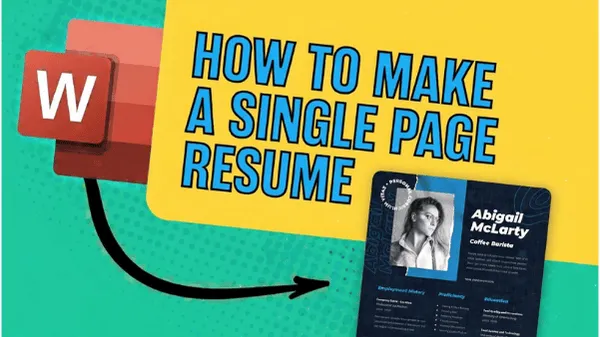
A one-page resume is ideal for freshers, early career professionals, and candidates who want to present their qualifications concisely. Recruiters often spend only a few seconds reviewing resumes, so a clear, focused, and well-structured one-page resume increases your chances of getting shortlisted. This guide covers tips, structure, and examples to create an impactful one-page resume.
Why a One Page Resume Is Effective
A one-page resume forces you to highlight only the most relevant skills, experience, and achievements. It ensures readability, avoids clutter, and is easier for Applicant Tracking Systems (ATS) to scan. Recruiters appreciate brevity without compromising the quality of information, making it perfect for fast-paced hiring processes.
Key Sections to Include
The essential sections for a one-page resume include contact information, a resume summary or objective, education, skills, work experience or projects, and achievements. Each section should be concise and focused on relevance to the job you are applying for.
One Page Resume Structure Table
| Section | Content Focus | Tips for Effectiveness |
|---|---|---|
| Contact Information | Name, phone, email, LinkedIn profile | Keep professional and updated |
| Resume Summary/Objective | Brief overview of skills, experience, and goals | Tailor to the job description, 2–3 lines |
| Skills | Hard and soft skills | Use keywords from the job description |
| Education | Degree, college, passing year, GPA/percentage | Include relevant coursework if applicable |
| Experience/Projects | Role, responsibilities, achievements | Use bullet points, quantify results where possible |
| Achievements/Certifications | Awards, certifications, notable accomplishments | Focus on relevant accomplishments |
Tips for Crafting a One Page Resume
Prioritize the most relevant information for the job. Use concise bullet points and action verbs to describe achievements. Avoid long paragraphs, graphics, or complex layouts that can confuse ATS. Choose a clean, professional font like Arial, Calibri, or Times New Roman and maintain consistent formatting throughout.
Examples of One Page Resume
For a fresher: Include internships, academic projects, technical and soft skills, and education. For experienced candidates: Highlight the most recent and relevant roles, key achievements, and measurable results. Always tailor content to match the job description and optimize for ATS.
FAQ About One Page Resumes
Q1: Can experienced professionals use a one-page resume?
A: Yes, if they focus on the most relevant roles and achievements.
Q2: How long should each section be?
A: Keep bullet points short, ideally 1–2 lines each, and avoid overcrowding.
Q3: Should I include all internships and projects?
A: Only include those relevant to the job and showcase skills or results.
Q4: Is a one-page resume ATS-friendly?
A: Yes, concise and keyword-optimized resumes are easier for ATS to parse.
Conclusion
A one-page resume is a powerful tool for standing out in competitive job markets. Focus on clarity, relevance, measurable achievements, and keyword optimization to make your resume impactful. Whether you are a fresher or an experienced professional, a well-structured one-page resume increases your chances of being shortlisted in 2026.
Disclaimer
This article provides guidance on creating one-page resumes. Results may vary depending on job requirements, employer preferences, and ATS software.